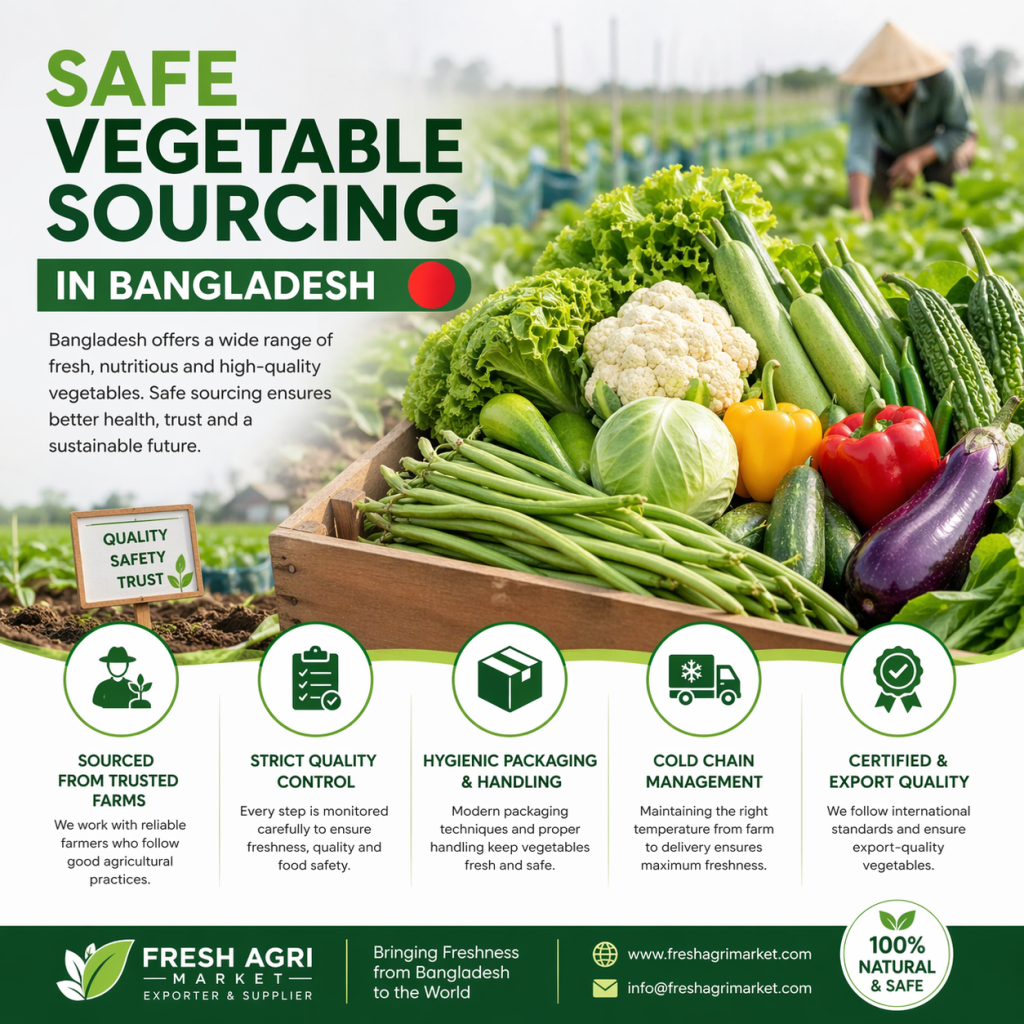
Safe Vegetable Sourcing in Bangladesh: A Complete Guide Bangladesh is one of the most fertile agricultural countries in South Asia, making it an ideal source for fresh and diverse vegetables. However, ensuring safe vegetable sourcing is crucial for both local consumers and international buyers. With increasing awareness about food safety, pesticide use, and quality standards, sourcing vegetables responsibly has become more important than ever.
First, choosing the right sourcing partner is key. Reliable suppliers follow proper farming practices, including controlled pesticide use, organic methods, and hygienic handling. Many professional buying houses in Bangladesh work directly with farmers to ensure traceability and quality control from farm to export.
Second, quality inspection plays a vital role. Before sourcing vegetables, it is important to check freshness, size consistency, and absence of harmful chemicals. Reputed sourcing companies conduct strict quality checks and sometimes lab testing to ensure products meet international standards. This is especially important for export markets like the EU, Middle East, and North America.
Another important factor is proper packaging and cold chain management. Vegetables are highly perishable, so maintaining the right temperature during storage and transportation is essential. Export-ready suppliers in Bangladesh use modern packaging techniques to preserve freshness and extend shelf life.
Certifications also add credibility to vegetable sourcing. Look for suppliers who comply with standards such as GAP (Good Agricultural Practices) and HACCP. These certifications ensure that vegetables are produced, handled, and processed safely.
Finally, building long-term relationships with trusted sourcing agents helps ensure consistent quality and supply. Companies like Fresh Agri Market focus on safe sourcing, farmer collaboration, and export-quality products, making them a reliable partner for global buyers.
In conclusion, safe vegetable sourcing in Bangladesh requires careful supplier selection, strict quality control, proper logistics, and certification compliance. By following these steps, businesses can ensure fresh, safe, and high-quality vegetables for their customers.